
Asbestos in Gold Coast Apartment Fire Doors: Why Your Locksmith Is Warning You Before Drilling
Posted by Jim Noort on 1st Mar 2026
“My locksmith is worried there may be asbestos in my apartment door… what’s up with that?”
If your unit entry door is a fire door, drilling for locks can become an asbestos and compliance issue. Here’s what your locksmith is looking at — and why. Updated April 2026 to include the active Pyropanel FRB alert and the 1999 Korab/Pyrokor recall.
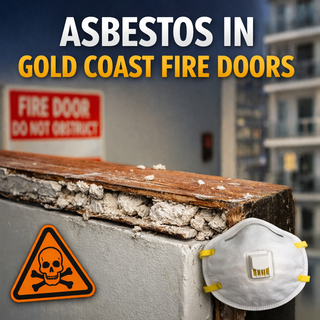

In Queensland apartments, the “front door” is usually a fire door set. Some fire doors — including doors installed in buildings constructed before 1990, doors from a recalled supply window in 1993–1998, and doors installed as recently as 2025 — can involve asbestos risk if the core is disturbed.
So when a locksmith says, “I’m not drilling that until we check,” it’s not being difficult — it’s a risk control decision. Drilling, boring, morticing, enlarging holes, or cutting into a fire door can create two separate problems:
- Health / contamination risk if asbestos fibres are released
- Fire door compliance risk — fire doors are certified systems; uncontrolled penetrations can compromise performance
This article clarifies: the three confirmed risk windows, what your locksmith is looking for, what white dust does and does not mean, what Queensland guidance says, and what the safest next step usually is.
For the broader picture on fire door compliance and smart lock upgrades, see our companion guides: Apartment Fire Doors on the Gold Coast: What Locks Are Actually Compliant? and Secondary Locks & the One-Penetration Principle.
This guide was reviewed and updated in May 2026. Regulatory information reflects guidance available as at April 2026.

Why your unit entry door is usually a fire door
In all Queensland apartment buildings (Class 2 buildings under the NCC), each unit must be fire-separated from the common corridor. That almost always means the main unit entrance is a fire resistant door set — not just a standard door leaf.

That’s why locksmiths take a fundamentally different approach on apartment doors than they would on a typical internal door. See: Chapter 05 — Fire Door Smart Locks in the Smart Lock Buyer’s Guide.

What your locksmith is worried about
Your locksmith is trying to prevent an “easy lock job” becoming an asbestos disturbance event and/or a non-compliant fire door modification.
The three confirmed risk windows
There is a common misconception that asbestos in fire doors is only a problem in older buildings. There are now three confirmed risk windows — one historical, one from a 1990s government recall, and one currently active. The door tag date is your first clue as to which window applies.


Telltale signs locksmiths check first (without drilling)
Important: there is no reliable visual confirmation of asbestos. These checks are about risk ranking before anyone disturbs the door.
1) The fire door tag / plate
A compliant fire door set is usually tagged. Your locksmith will photograph the tag because it can show the manufacturer, door rating details, and often the year of manufacture. A missing or illegible tag is a major red flag. The tag date is the primary indicator for all three risk windows:
- Pre-1990: Risk Window 1 — historical asbestos core possible.
- 1993–1998, Korab or Pyrokor brand: Risk Window 2 — subject to 1999 federal recall.
- 2021–2025, Pyropanel brand: Risk Window 3 — active alert, treat as asbestos until NATA lab confirmed.
2) The top edge of the door (the sandwich panel clue)
Many fire doors are built with a skin–core–skin construction. If the top edge shows a sandwich structure and the core is visible, that can raise suspicion — especially if the core looks board-like or crumbly.

3) Exposed core at common failure points
Your locksmith will look (without scraping or sanding) for core exposure at:
- Top edge (especially if the door has been planed or trimmed)
- Bottom edge (damage, swelling, wear)
- Existing lock cavity / latch area (previous hardware changes can expose core)
- Overpanels above the door (sometimes fire-rated too, sometimes overlooked)
4) Door brand, model and tag date — now more important than ever
Building age alone is no longer sufficient. The Pyropanel FRB contamination event means that doors installed as recently as mid-2025 in brand-new buildings may be affected. A competent locksmith will check the tag date and brand regardless of whether the building looks new.
“What’s the risk if we just drill one hole?”
Risk 1: Fibres + contamination
If asbestos is present in the core, drilling or cutting can release fibres and contaminate the corridor, tools, clothing, vehicle, and nearby surfaces.
This is why “minor drilling” is not treated as minor when asbestos is suspected — including brand-new buildings with 2021–2025 Pyropanel FRB doors.
Risk 2: Fire door compliance compromise
Fire doors are tested systems. Extra holes, incorrect preparation, or unapproved hardware can compromise performance and create liability.
Even if asbestos is not present, uncontrolled modifications can still be a compliance problem.
“If it makes white powder, does that mean it’s asbestos?”
No. Dust colour is not a reliable test. Many non-asbestos fire-rated core materials — including calcium silicate and some FRB formulations — can also produce pale dust.

The material locksmiths worry about most: Low Density Asbestos Fibre Board (LDB)
This is why a locksmith may refuse to proceed without confirmation — especially when the tag date falls in any of the three risk windows.

“Why doesn’t the building have an asbestos register?”
This is one of the most common frustrations for trades. In Queensland, asbestos register requirements are clear in workplace contexts — but strata is often messy in practice, and the right documents aren’t always available on the day.
Following the Pyropanel FRB contamination alert, any installed Pyropanel FRB door from the 2021–2025 supply window must be added to the building’s asbestos register, even if the building was constructed after the 2003 asbestos ban.

Are doors installed after 1990 asbestos-free?
There are now three risk windows — and Risk Window 3 covers doors installed in brand-new buildings as recently as mid-2025. The national asbestos ban has been in place since 31 December 2003. The Pyropanel FRB contamination demonstrates that this ban can be circumvented when overseas suppliers use asbestos-containing raw materials misclassified as asbestos-free.
- Pre-1990 doors: Risk Window 1 applies. Assume asbestos until NATA lab confirmed.
- 1993–1998 Korab/Pyrokor doors: Risk Window 2 applies. Federal recall. Confirm with building manager before any work.
- 2021–2025 Pyropanel FRB doors: Risk Window 3 — active alert. Treat as asbestos until NATA lab confirmed. This applies regardless of building age.
- All other periods: Lower risk, but visible core exposure, missing fire tags, damaged panels, or unknown supply history still justify pausing and seeking assessment before drilling.
A cautious assessment before any penetration is far safer than assuming compliance based on building age alone.
What to do next (if your locksmith raised an asbestos concern)
- Confirm whether it’s a fire door set. Look for a fire door tag/plate. Photograph it. Note the date and brand.
- Check which risk window applies. Pre-1990 = Window 1. Tag date 1993–1998, Korab/Pyrokor brand = Window 2 (recalled 1999). Tag date 2021–2025, Pyropanel brand = Window 3 (active alert 2025–2026).
- Do not drill “to check”. If the core is suspect, drilling is the disturbance event.
- Ask strata/building management for asbestos information. If it exists, it should be shared with trades before work starts. For Risk Window 3 (Pyropanel FRB), ask whether the building has received any notification from ASSA ABLOY, Firemex, or WorkSafe.
- If the door is damaged and loose material is exposed, stop. Queensland fire door guidance indicates damaged doors exposing loose asbestos material require removal by certified asbestos removalists.
- Arrange competent assessment/testing if needed. Proper sampling and NATA-accredited lab analysis is the only legally defensible pathway. Cost is typically $100–$300 per sample.
- For Risk Window 3 specifically: Commercial customers of Assa Abloy who believe they received an affected FRB delivery should contact their Assa Abloy sales representative directly. If the door was supplied by Firemex Pty Ltd between 2021 and 2025, contact Firemex to confirm.

Official references (updated April 2026)
Queensland and national regulators:
- Queensland Fire Department – Fire Doors information sheet (PDF) — includes Korab/Pyrokor recall details
- Workplace Health and Safety Queensland – Update on asbestos in fire doors
- WHSQ Alert – Imported asbestos fire door core (Firemex Pty Ltd)
- Asbestos Queensland – Update on asbestos in fire doors
- Asbestos Queensland – Low density asbestos fibre board (LDB)
- Asbestos Queensland – Asbestos registers, access for trades, and testing guidance
National safety alert — Heads of Workplace Safety Authorities (HWSA):
- HWSA – Safety alert: asbestos in fire rated boards used in manufacture of certain fire doors
- HWSA Safety Alert — Full PDF
- OHS Reps — HWSA Safety Alert in full (readable format)
Other state regulators:
- WorkSafe Victoria – Safety Alert: Asbestos-containing fire rated boards
- WorkSafe WA – Imported asbestos fire door core
Manufacturer notification and product recall:
- Pyropanel (ASSA ABLOY) – Important Notification FRB (updated 28 October 2025)
- Product Safety New Zealand – Voluntary recall: Pacific Door Systems Ltd (PDS) Pyropanel fire doors
Korab / Pyrokor recall (1999):
Related Guides
FRL ratings, compliance tags, certified smart lock options, strata approval — the broader compliance picture before any lock work begins.
What you can and can’t add to an apartment fire door — including why deadbolts are not permitted and what the compliant secondary option is.
E-Core, Firecore, and Pyropanel explained — and why the certification type matters as much as the FRL rating.
Current fire test certificates for the smart lock range — verify product certifications against your specific door core type.
AS1905.1, NCC D2.21, E-Core vs Firecore vs Pyropanel, and which products hold current certifications — the canonical fire door reference.
Professional assessment before any fire door lock work begins — including compliance verification and asbestos risk check on the Gold Coast.
Want a Second Opinion Before Anyone Drills?
If you’re on the Gold Coast and your locksmith has raised an asbestos concern, we can help you risk-rank the door before work proceeds.
Ask an Expert- The fire door tag (door + frame if both are present) — the date and brand are critical
- The top edge of the door (no scraping or sanding — just a photo)
- The existing lock/handle area (front + latch edge)
We’ll explain what the door likely is, which risk window (if any) it falls in, and what the safest next step is before any drilling happens.
Visit Australia’s leading Smart Lock showroom and workshop:
Gold Coast Smart Locks
9/2 Prosper Crescent
Burleigh Heads, QLD
See working models, compare gateways, and get real advice before you commit.
Disclaimer: This article is general information only and is not asbestos removal advice. The three risk windows described reflect information available from Australian and Queensland regulators as at April 2026 and may be updated as investigations continue. Asbestos identification requires competent assessment and/or NATA-accredited laboratory testing. If you suspect asbestos, do not disturb the material and follow Queensland regulator guidance and site-specific procedures. Information about the Pyropanel FRB contamination event is evolving — check the official government sources linked above for the latest guidance.