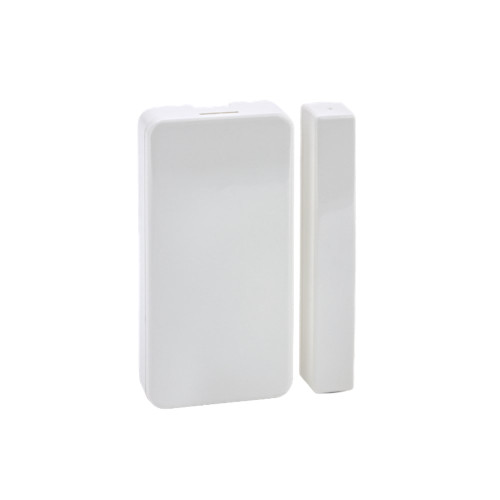
Risco Wireless 2-Way Door/Window Reed Switch – 1 Input – White
 Key Features
- Two-way wireless supervised door and window contact.
- Built-in magnetic reed switch for perimeter protection.
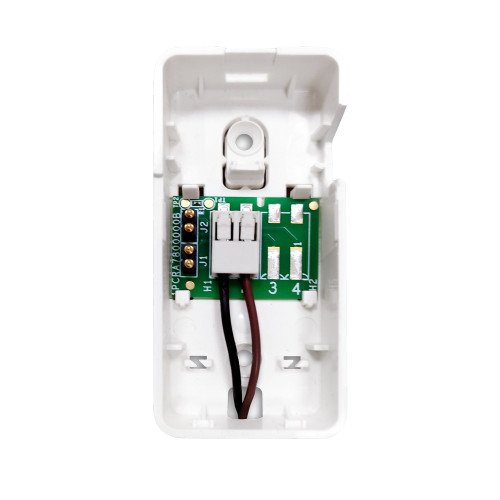
- Additional wired input for external sensors or contacts.
- Bi-directional communication for higher reliability and diagnostics.
- Selectable input response times for different sensor types.
- Back and cover tamper protection.
- Anti-sabotage tamper detection.
- Up to 300 metre wireless range in open air conditions.
- Battery-powered using standard CR123 lithium cell.
 Specifications
- Item Code: RWX73M43300D
- Brand: Risco
- Device Type: Wireless door and window reed switch
- Communication: Bi-directional wireless
- Frequency: 433.92 megahertz
- Wireless Range: Up to 300 metres (open air)
- Inputs: Built-in magnetic contact plus one auxiliary wired input
- Input Types: Normally Open, Normally Closed, or Double End of Line
- Battery Type: 1 x CR123 3 volt lithium
- Typical Battery Life: Up to 3 years
- Standby Current: 11 microamps
- Operating Temperature: 0 to 40 degrees Celsius
- Storage Temperature: -20 to 60 degrees Celsius
- RF Immunity: To EN50130-4
- Finish: White
 What's In The Box
- Wireless door and window transmitter
- Magnet
- Mounting bracket
- CR123 lithium battery
 Suitable Uses
- Wireless perimeter protection for doors and windows.
- Residential alarm installations.
- Small commercial security systems.
- Retrofit upgrades where wiring is not practical.
Dimensions

 Download PDF Resources
Frequently Asked Questions
- Can this contact be used on both doors and windows?
Yes. It is designed for general perimeter protection on both doors and windows. - What is the purpose of the additional wired input?
The auxiliary input allows connection of another wired sensor, such as a shock or secondary contact, into the same transmitter. - How long does the battery typically last?
Typical battery life is up to three years under normal operating conditions.
 Additional Information
- Commonly used in wireless alarm systems where running cable is not practical.
- The auxiliary input allows installers to combine multiple sensors into a single wireless zone.
- Two-way communication improves reliability by confirming signal delivery to the control panel.
- Regular battery checks are recommended in high-traffic installations.