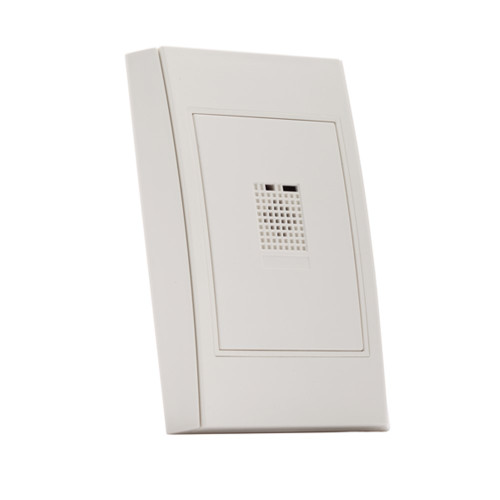
Risco ViTRON Glass Break Tester
The Risco ViTRON glass break tester is designed to simulate glass break sounds for testing compatible Risco glass break detectors. It allows installers to verify correct detector placement and operation without opening the detector housing.
 Key Features
- Advanced glass break pattern generator for detector testing.
- Simulates authentic glass break sounds.
- Remote test mode eliminates the need to open the detector.
- Automatic and manual operation modes.
- Active battery LED indication.
 Specifications
- Item Code: RG65
- Product Type: Glass break tester
- Function: Glass break pattern generator
- Operation Modes: Automatic and manual
- Indicator: Active battery LED
 What's In The Box
- 1 × Risco ViTRON glass break tester
 Suitable Uses
- Testing Risco ViTRON glass break detectors.
- Verifying correct detector positioning and coverage.
- Commissioning and servicing alarm installations.
 Frequently Asked Questions
- Can this tester be used with all glass break detectors?
It is designed specifically for compatible Risco ViTRON glass break detectors. Compatibility with other brands should be confirmed before use. - Does the detector need to be opened during testing?
No. The tester activates a remote test mode, allowing testing without opening the detector. - Is this tool required during installation?
It is commonly used by installers to confirm correct detector placement and operation during commissioning.
 Additional Information
- Glass break testers are standard tools used to verify detector sensitivity and coverage.
- Testing during installation helps reduce false alarms and missed detection events.
- Installers typically use the tester during commissioning and scheduled maintenance.