
Smart Lock Not Locking? 3 Common DIY Installation Mistakes (And Easy Fixes)
Posted by Mat Steele on 18th Feb 2026
Smart Lock Not Locking?
3 Common DIY Installation Mistakes (And Easy Fixes)
Smart locks are designed to be installer-friendly — and many DIY installations go smoothly. However, we regularly see a handful of common mistakes that cause frustration, unexpected behaviour, or concerns that the lock is faulty.
The good news: most of these issues are installation-related — and completely fixable. Below are the three most common DIY installation problems we see, and how to correct them.
Quick Scan: The 3 Most Common DIY Mistakes
1) Handle still opens when “locked”
Usually caused by the spindle / hub being set in the wrong position.
2) Wrong hardware or backset
Often needs the correct latch, lock body, or model to suit the door preparation.
3) Poor door preparation / fitment
Holes not square/straight can cause binding and may damage the lock over time.
1. “My Smart Lock Doesn’t Lock” (Handle Still Opens When Locked)
This is the number one support call we receive.
Customers commonly say: “It’s locked — but when I pull the handle it still opens.” Or: “If I lift the handle, the latch retracts even though it’s locked.”
In almost every case, this is not a faulty lock.
It is the spindle or hub being set in the incorrect position during installation.
Why this happens: most smart locks use an adjustable internal spindle / hub system. If it’s positioned incorrectly:
- The latch can retract while the lock is in locked mode
- The handle can still operate the latch
- The lock appears to not be locking
- The motor relocks, but the mechanical connection is wrong
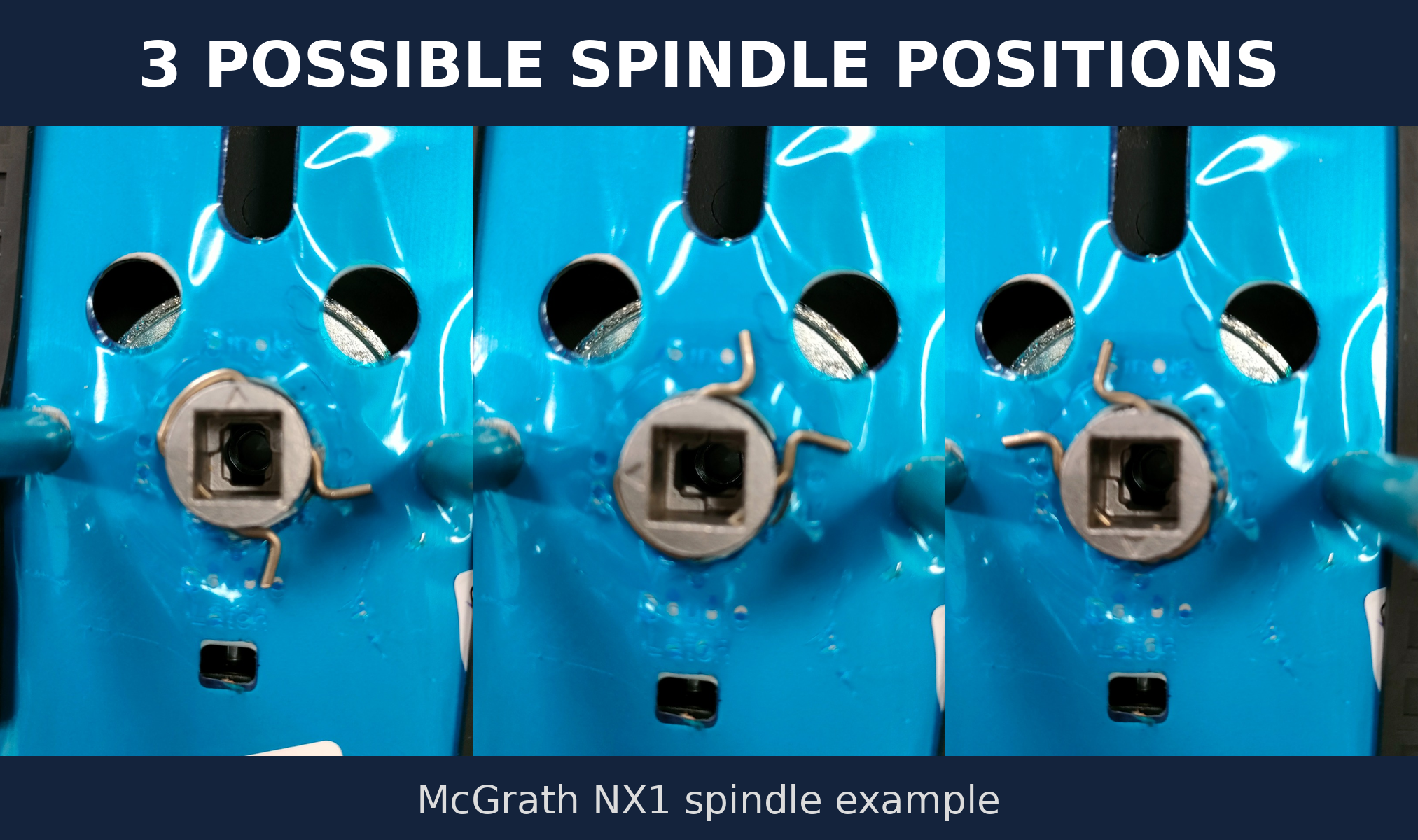
McGrath NX1 spindle example — the hub has three possible spindle positions. If the wrong one is selected, the handle can still retract the latch while the lock is “locked”.
The simple fix (good news): this is usually a 5–10 minute correction.
- Remove the lock from the door.
- Hold the lock body and latch in your hands while the lock is in locked mode (no code or fingerprint entered within the last 5–10 seconds).
- While locked:
- Push the handle down → nothing should happen
- Lift the handle (if applicable) → nothing should happen
- The latch must NOT retract
- If the latch retracts in either direction, adjust the spindle / hub position and retest. (Refer to the photo above — the hub has three possible spindle positions.)
- Correct setup is when the latch only retracts while the lock is actively in unlock mode.
Once set correctly, the problem disappears.
*Please note, if the hub doesn't freely move, some locks require batteries inserted and connecting cable connected to change the handing.
2. Choosing the Wrong Hardware or Backset
Another very common issue is selecting the wrong configuration for the door.
Examples include:
- Ordering a 60mm backset when the door is 70mm
- Choosing a tubular latch model when the door is prepared for a mortice lock
- Installing on a door too thick or too thin for the supplied spindle
- Purchasing a smart lock that doesn’t match the existing hole pattern
This can result in:
- Poor alignment
- Excess handle tension
- Visible gaps
- Difficulty mounting the internal unit
- A lock that simply doesn’t sit correctly
In some cases, the correct lock body, latch, or component will need to be ordered.
Before you purchase: if you’re unsure whether a smart lock will suit your existing door preparation, it’s always worth confirming compatibility first.
A quick check before ordering can prevent delays, returns, and unnecessary expense. Ask our expert team before purchasing and we’ll confirm the lock you’re considering will work with your door.
3. Poor Door Preparation or Fitment
This is the installation error that can actually damage a smart lock.
We often see:
- Cross-bore holes drilled slightly off-centre
- Holes not drilled square to the face of the door
- Mortice cavities cut unevenly
- Timber splintered or compressed
- Strike plates misaligned
Smart locks contain internal motors and gear assemblies. If the latch or bolt is under tension because the door preparation is not square or straight, the motor is forced to work harder than it should.
Over time, this can:
- Drain batteries quickly
- Cause delayed locking
- Create grinding or clicking noises
- Lead to premature internal failure
A smart lock should operate freely and smoothly without resistance. If you feel binding, tightness, or force during operation — stop and correct the door preparation before continuing.
Forcing a smart lock into a poorly prepared door can void warranty and cause unnecessary damage.
Final Thought
In our experience, the majority of “faulty” smart locks are not faulty at all. They are installation-related — and most are completely fixable.
Taking the time to check spindle orientation, confirm correct hardware selection, and ensure proper door preparation can prevent nearly all common issues.
Still Stuck?
Gold Coast — Hands-on Help
Need someone to attend and sort it properly?
Visit tlslocks.com.au and select option one to book one of our highly experienced locksmiths for all your smart lock needs.
Phone Support (30 Minutes)
Outside the area or just need expert guidance?
Book a dedicated 30-minute phone support session here:
Qualified Locksmith Installation Telephone Support (30 mins)
Want to avoid the most common DIY mistakes?
Before you buy, use our Ask an Expert form and we’ll help confirm the right lock and components for your door — so your install goes smoothly the first time.