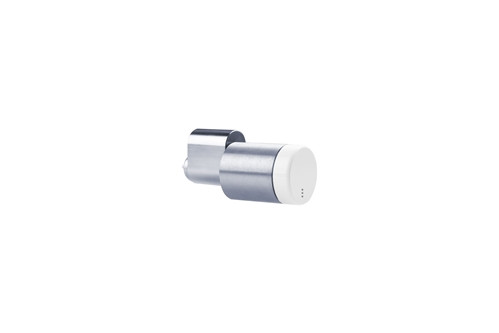
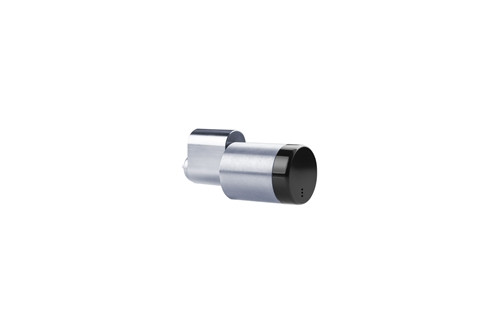
ASSA ABLOY SMARTair Knob Cylinder Range – iCLASS RFID Electronic Cylinders
The ASSA ABLOY SMARTair Knob Cylinder range provides electronic access control in a compact cylinder format that replaces conventional mechanical cylinders. These electronic cylinders allow doors to be upgraded from mechanical key systems to credential-based access without major door modifications.
SMARTair cylinders are commonly installed in offices, laboratories, commercial buildings, education facilities and restricted-access environments where electronic access control is required but wiring through the door is not desirable.
Users unlock the door by presenting authorised RFID credentials or, depending on the model, using Openow smartphone credentials. Access permissions, schedules and audit information are managed through the SMARTair software platform.
The cylinder range supports several SMARTair management architectures including Standalone, Update-on-Card, and Wireless Online with Openow mobile access.

Dispatch times vary by model. Many models ship in 2–3 business days.
 Key Features
- Electronic knob cylinder replacing traditional mechanical cylinders.
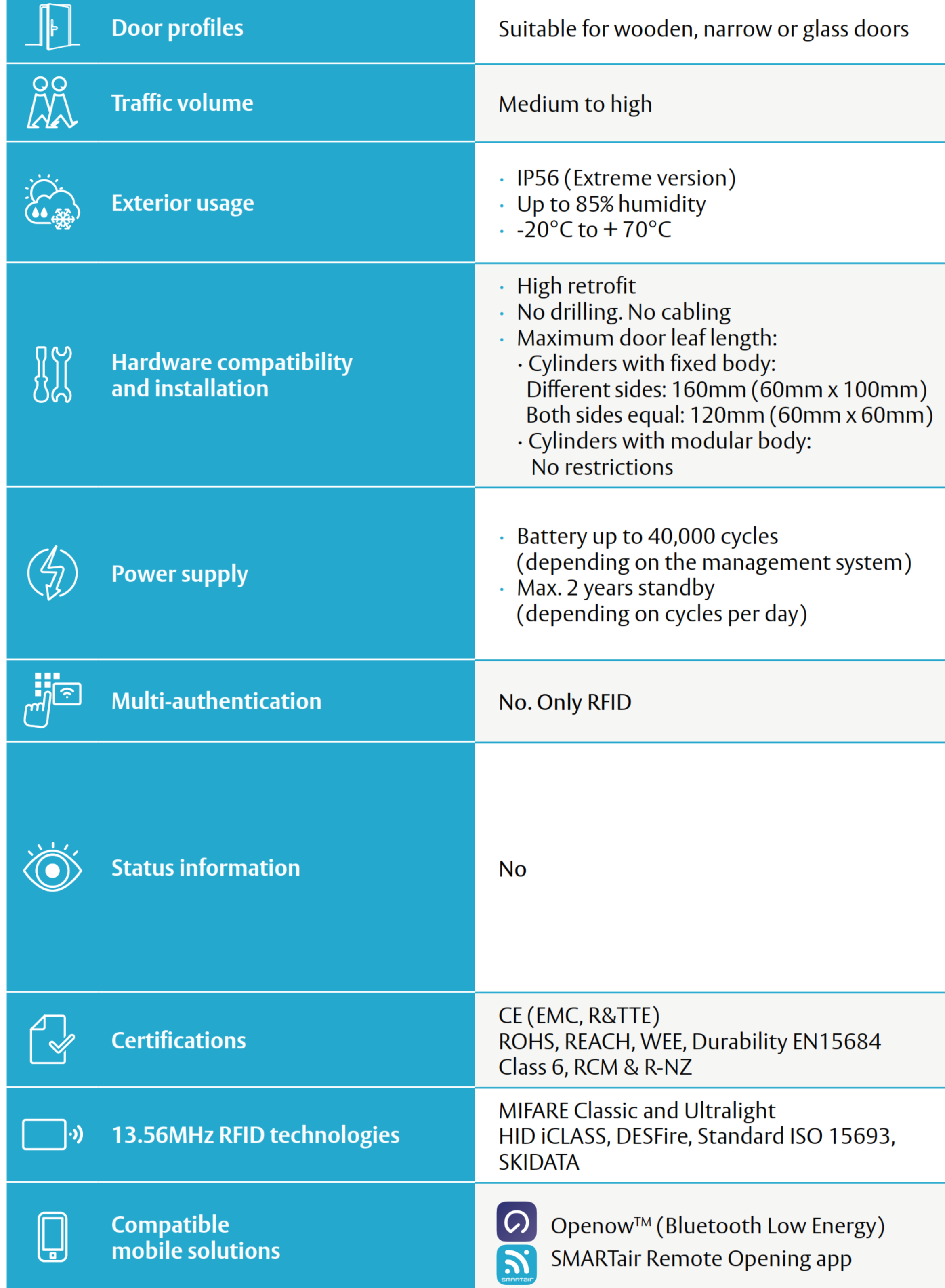
- Compatible with iCLASS RFID credentials.
- Select models support Openow smartphone credentials.
- Available in Standalone, Update-on-Card and Wireless Online architectures.
- Wireless battery-powered operation – no cabling through the door.
- Audit trail and credential control through SMARTair software.
- Suitable for retrofit installations in many existing doors.
- IP55–IP56 environmental protection depending on model.
 Access Methods
-
RFID Credential
HID iCLASS  Mobile Access
Openow Smartphone
 SMARTair Knob Cylinder Model Comparison
 Specifications

These terms are related, but they do not mean the same thing.
- Wireless Online is the SMARTair system architecture that allows door devices to communicate with the management system in real time through wireless hubs.
- Openow is the mobile credential technology that allows a smartphone to act as a secure digital key using Bluetooth Low Energy (BLE).
- A product can support Wireless Online, Openow, or both depending on model and configuration.
In simple terms: Wireless Online is the infrastructure, while Openow is the smartphone access method.
Update-on-Card (UOC) is a SMARTair system architecture where access rights are carried and updated through the user’s RFID credential.
- User permissions are written to the card using SMARTair software.
- When the card is presented to the system, updates can be transferred between the credential and the locking device.
- This reduces the need for every door to be permanently connected in real time.
Update-on-Card is often used where a site wants strong credential control and audit capability without the added infrastructure of a fully Wireless Online installation.
SMARTair products are available in different management architectures depending on how much control and connectivity the site requires.
- Standalone – credentials are programmed directly at the device. Best for simpler installations with basic access control requirements.
- Update-on-Card – access permissions are carried and updated through RFID credentials. Offers more control without requiring every opening to be permanently online.
- Wireless Online – devices communicate with the SMARTair system in real time via wireless hubs, allowing live updates, monitoring and faster administration.
The right choice depends on the size of the site, the required level of control, and how frequently access rights need to change.
MIFARE and HID iCLASS are different RFID credential technologies used in commercial access control systems.
- MIFARE is widely used across many access systems and other credential-based applications.
- HID iCLASS is commonly used in enterprise and institutional access control systems built around HID credentials.
- The reader type must match the credential type already used on the site.
If the building already uses one technology, the electronic cylinder or reader should normally be selected to match that credential platform.
Both are SMARTair electronic access devices, but they solve different installation problems.
- Knob Cylinder – replaces the door cylinder and keeps the existing lock body. This is often a neat solution where the existing hardware is being retained.
- Escutcheon Lock – replaces more of the furniture around the lock and typically includes lever or handle control as part of the electronic assembly.
- Knob cylinders are commonly chosen where a simple cylinder retrofit is preferred, while escutcheons are better suited to doors requiring a more complete electronic handle set solution.
In short: knob cylinders focus on replacing the cylinder, while escutcheons replace more of the operating hardware around the lock.

SMARTair knob cylinders are often selected for retrofit access control upgrades because they can convert many mechanical doors to electronic credential access without major changes to the door.
- No cabling through the door is required.
- The existing lock body can often remain in place.
- Electronic access can be added without the disruption of a full hardwired access control installation.
- Lost credentials can be cancelled digitally rather than replacing keys and cylinders.
This makes SMARTair knob cylinders a strong option for upgrading offices, schools, healthcare facilities and commercial buildings from mechanical keys to managed electronic access.

ASSA ABLOY branded products purchased new in Australia from authorised resellers are covered against defects in materials and workmanship for:
- Mechanical components: 10 years
- Electrical and electronic components: 5 years (excluding batteries)
- Cylinders and keys: 3 years

SMARTair Wireless Access Control Overview
ASSA ABLOY Warranty Overview
ASSA ABLOY branded products sold in Australia are covered by manufacturer warranties issued by ASSA ABLOY Australia Pty Ltd. Warranty coverage varies depending on mechanical components, electronic components, cylinders and finish categories.
This overview summarises the structure of ASSA ABLOY warranty coverage. Full terms, exclusions and claim procedures are set out in the official ASSA ABLOY Warranty document.
 Warranty Periods Summary
 Finish & Material Notes
- Stainless steel does not mean stain-free. Tea staining is not covered where cleaning and maintenance guidelines have not been followed.
- Cosmetic, decorative and appearance damage is not covered.
- Battery failure or battery leakage damage is not covered.
What the Warranty Covers
- Defects in material and workmanship within the applicable period.
- Assessment by ASSA ABLOY to determine repair, replacement with the same or closest equivalent product, or refund of purchase price.
- Remedy determined at ASSA ABLOY’s discretion.
 Common Exclusions
- Normal wear and tear.
- Misuse, abuse or installation outside published technical specifications.
- Improper maintenance or neglect.
- Unauthorised modification or repair.
- Use of non-genuine ASSA ABLOY parts or substitute components.
- Exposure to corrosive environments including coastal air, salt spray, chemicals, contamination or high humidity.
- Removal, refitment, freight or labour charges.
- Second-hand or imported products not sold through authorised Australian channels.
 Warranty Claim Process
- Retain proof of original purchase.
- Return the product to the original authorised retailer where applicable.
- If claiming directly, obtain a case number before returning goods.
- Securely package returned goods and clearly reference the case number.
- Warranty assessment determines repair, replacement or refund.
 Australian Consumer Law
ASSA ABLOY warranties operate in addition to rights available under the Australian Consumer Law. Goods come with guarantees that cannot be excluded. Customers may be entitled to a replacement or refund for a major failure and compensation for reasonably foreseeable loss or damage.
Where a product fails to meet acceptable quality standards and the failure does not amount to a major failure, the customer is entitled to repair or replacement.