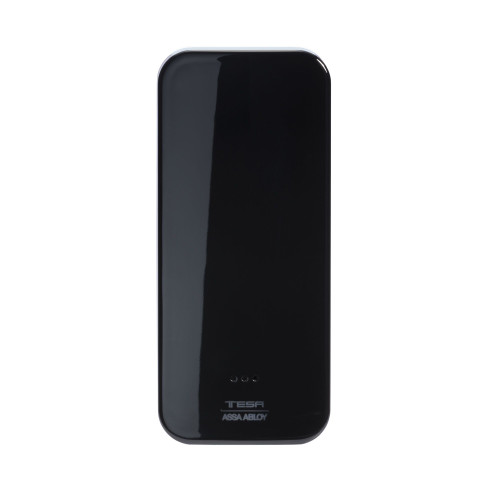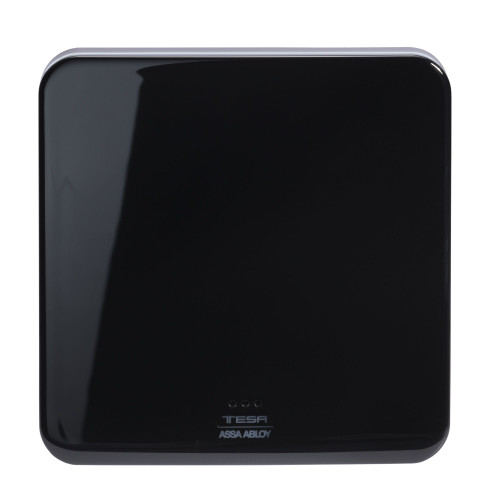

ASSA ABLOY SMARTair i-Reader R4N Wide – MIFARE RFID Wall Reader with Openow Mobile Access
The ASSA ABLOY SMARTair i-Reader R4N Wide is a wall-mounted RFID access control reader designed for automated entry systems such as electric doors, turnstiles, lift controls, boom gates and perimeter access points.
This reader forms part of the SMARTair electronic access control ecosystem, allowing secure entry using RFID credentials or smartphone credentials issued through the SMARTair management platform.
The Wide reader format provides a larger front face compared to the slim version, making it suitable for installations where greater visual presence or wider mounting plates are required. The reader connects to a SMARTair relay/control board which activates locking hardware such as electric strikes, electromagnetic locks or automated gate controllers.
This model (S4BR2Wide1) supports MIFARE RFID credentials and operates within SMARTair Update-on-Card architecture with optional Openow mobile access via Bluetooth Low Energy.
For a full overview of the SMARTair ecosystem see the SMARTair Wireless Access Control Overview .

Usually ships in 30-35 business days.

Designed for professional access control environments including offices, education campuses, healthcare facilities and commercial buildings.
 Key Features
- SMARTair RFID wall reader for automated access control.
- Wide reader format suitable for larger mounting areas.
- Compatible with MIFARE 13.56MHz credentials.
- Supports Openow smartphone credentials via Bluetooth Low Energy.
- Operates within SMARTair Update-on-Card system architecture.
- Upgradeable to wireless SMARTair installations.
- Encrypted communication with SMARTair control board.
- LED indicators and audible buzzer for status feedback.
- Multiple access logic modes including passage and double-user mode.
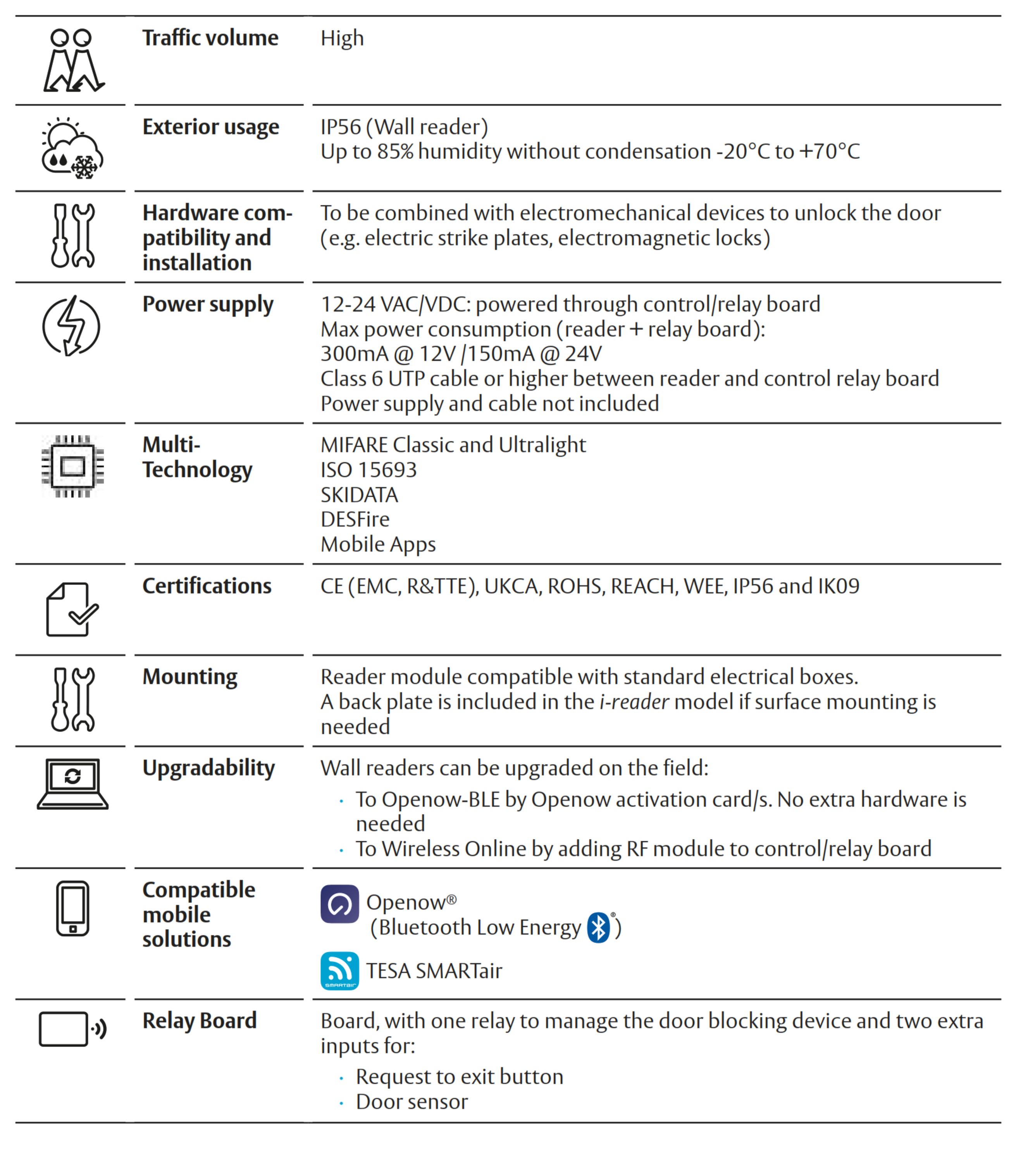
 Technical Overview – SMARTair i-reader
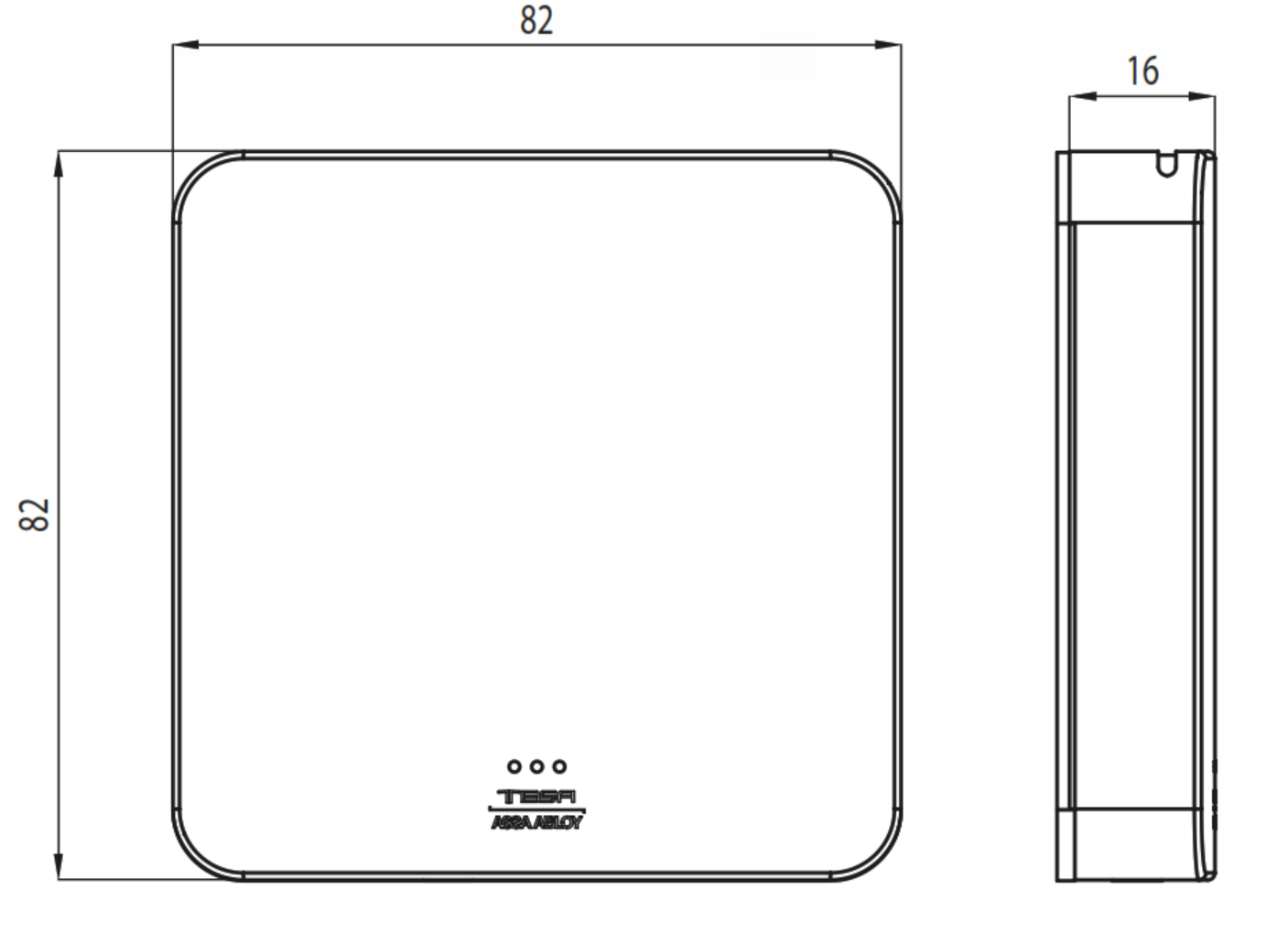
 Dimensions
 Access Methods
-
RFID Credential
MIFARE Card / Tag  Mobile Access
Openow Smartphone
System Capacity & Scheduling
- Normal mode: approx. 3,000 users.
- Extended mode: approx. 6,500 users.
- High-traffic mode supporting unlimited users organised into 48 access groups.
- Event log capacity: approx. 1,200 events.
- Supports up to 30 time zones with programmable schedules.
- 365-day holiday calendar with automatic daylight-saving adjustment.
- Internal clock backup approx. 8 hours without power.
Time Scheduling & Automation
- 30 programmable time zones.
- 5 time periods per zone.
- 365-day holiday calendar.
- Automatic daylight saving adjustment.
- Clock and calendar retained for approx. 8 hours during power loss.
Power Supply & Electrical Requirements
- External power supply required.
- Operating voltage: 12-24 VAC / VDC.
- Maximum power consumption approx. 300mA @12V.
- Reader connects to SMARTair relay/control board.
- No internal battery or mechanical override key.
Environmental Performance
- Exterior protection rating: IP56.
- Impact resistance: IK09.
- Operating temperature: −20°C to +70°C.
- Humidity tolerance up to 85% (non-condensing).
Variants
- S4BR2P0 – Update-on-Card / Openow system without relay output.
- S4BR2P1 – Update-on-Card / Openow system with single relay output.

SMARTair is the electronic access control platform that manages locks, readers, users, credentials and access permissions across a building.
Openow is the mobile credential technology within SMARTair that allows smartphones to act as digital keys using Bluetooth Low Energy (BLE).
- SMARTair = access control system.
- Openow = smartphone credential technology.
- Mobile credentials are issued and managed through SMARTair software.
Update-on-Card (UOC) is a SMARTair system architecture where access permissions are carried by the user's RFID credential.
- User permissions are written to the card using SMARTair software.
- When the card is presented to a reader, updates are transferred to the lock.
- Events can also be collected through update points.
This architecture allows access control systems to operate without constant network connectivity.
SMARTair supports multiple system architectures depending on the level of control required.
- Update-on-Card – access permissions travel with the RFID card and update locks when presented.
- Wireless Online – locks communicate with the SMARTair server through wireless hubs for real-time updates and monitoring.
Wireless Online systems allow remote control of doors and immediate credential updates across the installation.

SMARTair hardware designed for outdoor use is engineered for demanding environments and may carry environmental protection ratings such as IP56 or IP68.
- Always follow manufacturer installation orientation requirements.
- Ensure weather seals are correctly installed.
- Avoid leaving devices open or exposed unnecessarily.
Correct installation ensures the environmental protection rating is maintained.
MIFARE and HID iCLASS are two different RFID credential technologies used in electronic access control systems.
- MIFARE – widely used open RFID standard commonly used in commercial access systems.
- HID iCLASS – proprietary credential platform used in many enterprise security systems.
The reader technology must match the credentials used in the building's access control system.
SMARTair wall readers are available in versions with or without relay outputs.
- No Relay – the reader only identifies credentials and sends data to another access controller.
- 1 Relay – the reader can directly activate an electric strike, magnetic lock or automated door.
In most standalone access control installations, the 1 relay version is required to operate the locking hardware.

ASSA ABLOY branded products purchased new in Australia from authorised resellers are covered against defects in materials and workmanship for:
- Mechanical components: 10 years
- Electrical and electronic components: 5 years (excluding batteries)
- Cylinders and keys: 3 years

SMARTair i-Reader Datasheet
SMARTair i-Reader Brochure
SMARTair System Information Guide
ASSA ABLOY Warranty Overview
ASSA ABLOY branded products sold in Australia are covered by manufacturer warranties issued by ASSA ABLOY Australia Pty Ltd. Warranty coverage varies depending on mechanical components, electronic components, cylinders and finish categories.
This overview summarises the structure of ASSA ABLOY warranty coverage. Full terms, exclusions and claim procedures are set out in the official ASSA ABLOY Warranty document.
 Warranty Periods Summary
 Finish & Material Notes
- Stainless steel does not mean stain-free. Tea staining is not covered where cleaning and maintenance guidelines have not been followed.
- Cosmetic, decorative and appearance damage is not covered.
- Battery failure or battery leakage damage is not covered.
 What the Warranty Covers
- Defects in material and workmanship within the applicable period.
- Assessment by ASSA ABLOY to determine repair, replacement with the same or closest equivalent product, or refund of purchase price.
- Remedy determined at ASSA ABLOY’s discretion.
 Common Exclusions
- Normal wear and tear.
- Misuse, abuse or installation outside published technical specifications.
- Improper maintenance or neglect.
- Unauthorised modification or repair.
- Use of non-genuine ASSA ABLOY parts or substitute components.
- Exposure to corrosive environments including coastal air, salt spray, chemicals, contamination or high humidity.
- Removal, refitment, freight or labour charges.
- Second-hand or imported products not sold through authorised Australian channels.
 Warranty Claim Process
- Retain proof of original purchase.
- Return the product to the original authorised retailer where applicable.
- If claiming directly, obtain a case number before returning goods.
- Securely package returned goods and clearly reference the case number.
- Warranty assessment determines repair, replacement or refund.
 Australian Consumer Law
ASSA ABLOY warranties operate in addition to rights available under the Australian Consumer Law. Goods come with guarantees that cannot be excluded. Customers may be entitled to a replacement or refund for a major failure and compensation for reasonably foreseeable loss or damage.
Where a product fails to meet acceptable quality standards and the failure does not amount to a major failure, the customer is entitled to repair or replacement.